Article
-
Johannes Eriksson
-
- Quality Management System
- 3 min reading
The purpose of food business operators' own-check activities is to protect consumers and deliver safe food. Legislation imposes clear requirements on all operators who handle food and drink in the course of their business. A well-functioning own-check system helps you to identify and manage risks in a timely manner, often with strong support from the principles of HACCP. Here we review the legal requirements, key features and how you can structure your own food controls.
What does HACCP mean?
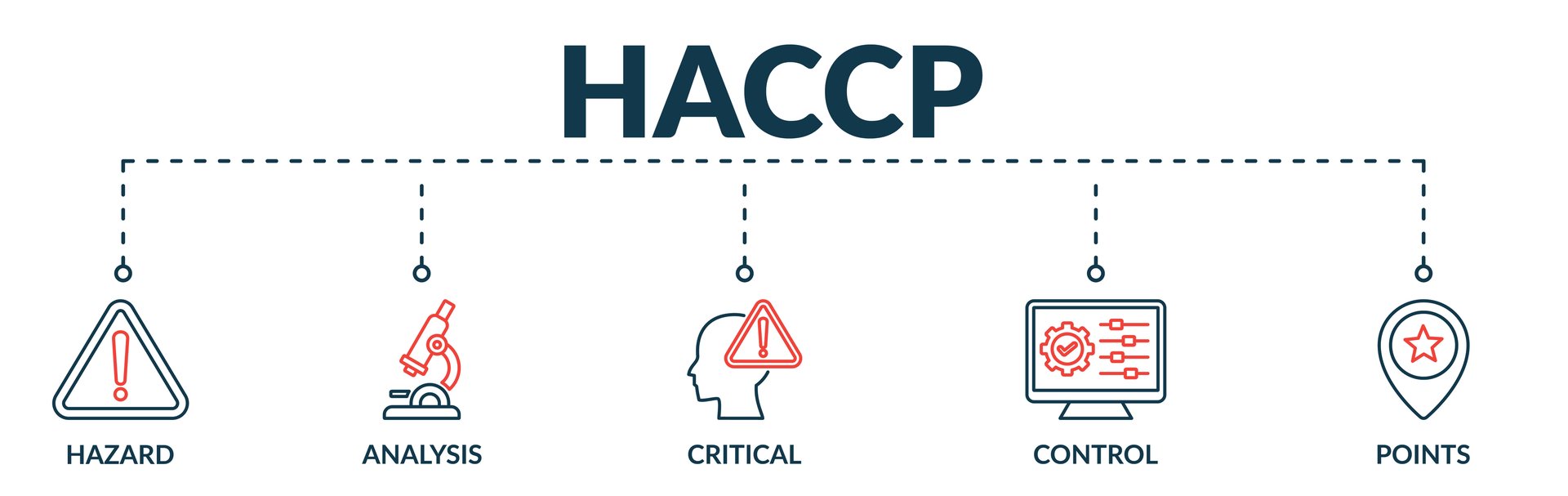
HACCP stands for Hazard Analysis and Critical Control Points and is a systematic approach to mapping hazards and identifying critical control points throughout the food chain.
The aim of the method is to prevent health hazards before they occur, such as bacterial growth, incorrect refrigeration temperatures or cross-contamination of allergens. For food self-checking to work, your business needs to have a good foundation in place, such as basic hygiene practices for staff, pest control, regular cleaning schedules and proper training. Once this foundation is laid, you can focus on the specific risks in your unique processes.
Businesses covered by the rules
The requirement for a documented own-check program for food applies to virtually all operators in the industry. The rules are based on the Swedish Food Act and affect everything from restaurants, cafés and grocery stores to school kitchens and wholesalers. Large manufacturers, transportation companies and waterworks also fall under this legislation. Documentation requirements are adapted to the size of the business and the type of handling. A large processing industry faces a more complex set of requirements than a small bakery, but the basic principle of safe food applies to all.
Getting started with food self-checking
Building a whole new system takes time and effort, so a smart first step is to start with a food self-assessment template instead. This will give you a clear structure for your documentation and an overall map of the procedures and checklists that need to be in place.
When designing your structure with a ready-made HACCP template, you will need to customize each point according to your operation's handling, premises and specific products. Many trade associations offer a basic HACCP self-assessment template that members can download and adapt to their own needs.
HACCP self-checking template
This is how a HACCP analysis can work:
-
Write a product description
-
Describe all the steps in how you handle the food. How do you receive the product, how do you store it, how do you process it, how do you sell or deliver it...
-
Go through all the steps from point 2 and identify possible health hazards. Include all types of hazards: microbiological, physical, chemical and allergenic.
-
Make a risk assessment for each of the hazards you found in point 3.
-
Develop improvement actions.
-
Determine where the critical control points are.
-
Determine the critical limits for each critical control point and develop any rules and guidelines.
-
Develop a system to monitor each critical control point (e.g. a protocol for regular temperature measurements).
-
Make a plan for what to do if something does go wrong (e.g. "if fridge 1 breaks down, we can move goods like this to fridge 2, as long as the temperature in fridge 1 is still below this critical limit"). Make sure the plan says who will do what, when it will be done and how.
-
Write procedures for documenting and evaluating your work.
Critical limit = A limit where something goes from being acceptable to being unacceptable, for example a temperature in a freezer or an amount of chlorine in drinking water.
Critical control point = A point at which it is necessary to use a control measure to ensure that a foodborne hazard can be prevented, eliminated or reduced.
Implementing the work in everyday life
Once the HACCP analysis is complete, it is time to put the theory into practice. A functioning flow is based on employees having the right conditions to do the right thing. Clear and visual flow charts are a good support to show exactly how raw materials should be received, stored and prepared.
Each critical control point requires careful monitoring and traceability. A completed self-monitoring record serves as direct evidence that refrigeration temperatures have been maintained or that cleaning has been carried out according to procedures. Ongoing documentation also greatly facilitates an inspection by the local environmental and health protection board. Should a deviation occur, the procedures must also show exactly what actions staff should take to correct the error quickly.
Simplify management with a digital system
Managing temperature lists and cleaning schedules on paper often creates disorder and leads to unclear or lost information. With a digital management system, you move your entire food self-check structure to an easily accessible platform. Employees can fill in their protocols directly on their mobile phones and receive a notification if a control is missed, while management gets a full overview of all deviations in real time. Smooth digital flows make it easier to keep food safety at the highest level every day.
Get a demo
Ready to make work easier - and more enjoyable?
Want to see for yourself how AM System can make a difference for you? Book a demo and discover how easy it is to create structure, efficiency, and seamless workflows in your daily operations.